What Is Acupuncture?
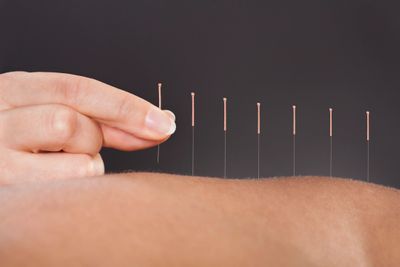
Acupuncture is a natural, time-tested healing practice that originated as one of five pillars of Traditional Chinese Medicine (TCM) over 2,500 years ago. It involves the gentle insertion of very thin, filiform sterile needles into specific points on the body to support the body’s natural ability to heal and restore balance.
According to traditional Chinese medicine, the body’s vital energy—often referred to as Qi (pronounced “chee”)—flows through pathways called meridians. When this flow becomes blocked or unbalanced, it can lead to discomfort, pain, or illness. Acupuncture works to restore the smooth flow of energy, helping the body return to a state of harmony.
From a modern perspective, acupuncture is understood to stimulate the nervous system, improve circulation, and encourage the release of the body’s natural pain-relieving and mood-enhancing chemicals. Many people experience a deep sense of relaxation during and after treatment.
What is Chinese Herbal Medicine and Diet?
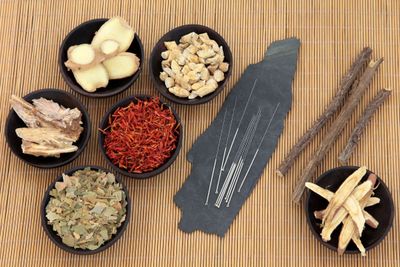
Traditional Chinese Medicine (TCM) uses diet and herbal medicine to balance the body's energy (Qi), yin, and yang, viewing food as medicine to prevent illness. Key principles involve eating warm, cooked foods to support digestion, balancing five flavors (sweet, sour, bitter, pungent, salty) for specific organs, and eating seasonally. Chinese herbal medicine (CHM) is a core component of TCM, using plant, mineral, and sometimes animal-based substances to restore energy balance (Yin/Yang) and treat ailments.
What is Moxibustion and Infrared Light Heat Therapy?
Heat in its various forms is used in a therapeutic context in Traditional Chinese Medicine (TCM), Moxibustion, the warming of dried mugwort (moxa) near points along various channels along the body, nourishes and strengthens the body, dispels cold, supports circulation, promotes deep relaxation, relieves pain, and enhances overall health and vitality.
According to Western Medicine, Infrared red light heat therapy, or photobiomodulation (PBM), uses low-level, non-thermal light wavelengths to stimulate mitochondria, enhancing cellular energy (ATP) to reduce pain, inflammation, and improve skin health. It is safe and non-invasive, commonly used in pads, beds, and mats to treat conditions like arthritis, muscle soreness, and skin issues.

What is Cupping, Gua Sha Therapy and Tui Na Body Work?
Cupping therapy is an ancient TCM healing technique that uses specialized cups to create suction on the skin. It draws blood to the surface to promote healing, increase circulation, and provide pain relief.
Gua Sha Therapy is a TCM technique involving skin scraping with a smooth-edged tool. This improves circulation, relieve muscle tension, and promote lymphatic drainage.
Tui Na body work is a 2,000+ year-old TCM body work or manipulation that balances the body's energy to treat pain, chronic conditions, and stress. Some of he techniques used are kneading, rolling, and acupressure on specific points along energy meridians.

What is Acupressure and Acutonics?
In Traditional Chinese Medicine (TCM), Acupressure removes blockages in meridian lines to treat illness. According to modern science, Acupressure triggers endorphins, boosts blood flow, and releases muscle tension. It is used for pain management, stress, mental health, and general wellness, as well as many other conditions similar to Acupuncture.
Acutonics is a form of Acupressure that uses the frequencies of precisely measured tuning forks to help treat conditions similar to Acupuncture. It is a non-invasive, energy-based sound healing modality that applies precision-calibrated tuning forks to acupuncture points, meridians, and chakras to promote healing and balance.
What is Reiki?
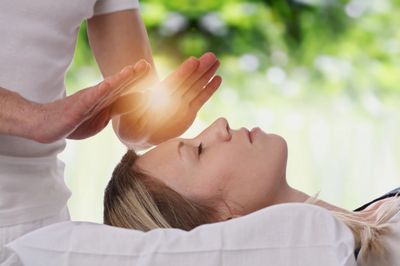
Reiki is a Japanese energy-based, complementary therapy by guiding "universal life force energy" through a practitioner's hands to the recipient. It is used to balance energy fields, potentially aiding in pain management, anxiety reduction, and emotional wellness. Often called palm healing or hands-on healing, it involves light touch or hovering over a clothed person. There is evidence-based research that Reiki Therapy is effective in helping to treat a multitude of health conditions and is currently used as a complementary approach in hospitals for stress reduction, pain management (migraines, chronic pain), supporting cancer recovery, and improving emotional/mental balance.

Announcement
Greetings! Enjoy Our Fall 2026 Community Welcome of 20% Off Of Our Initial Acupuncture Services!